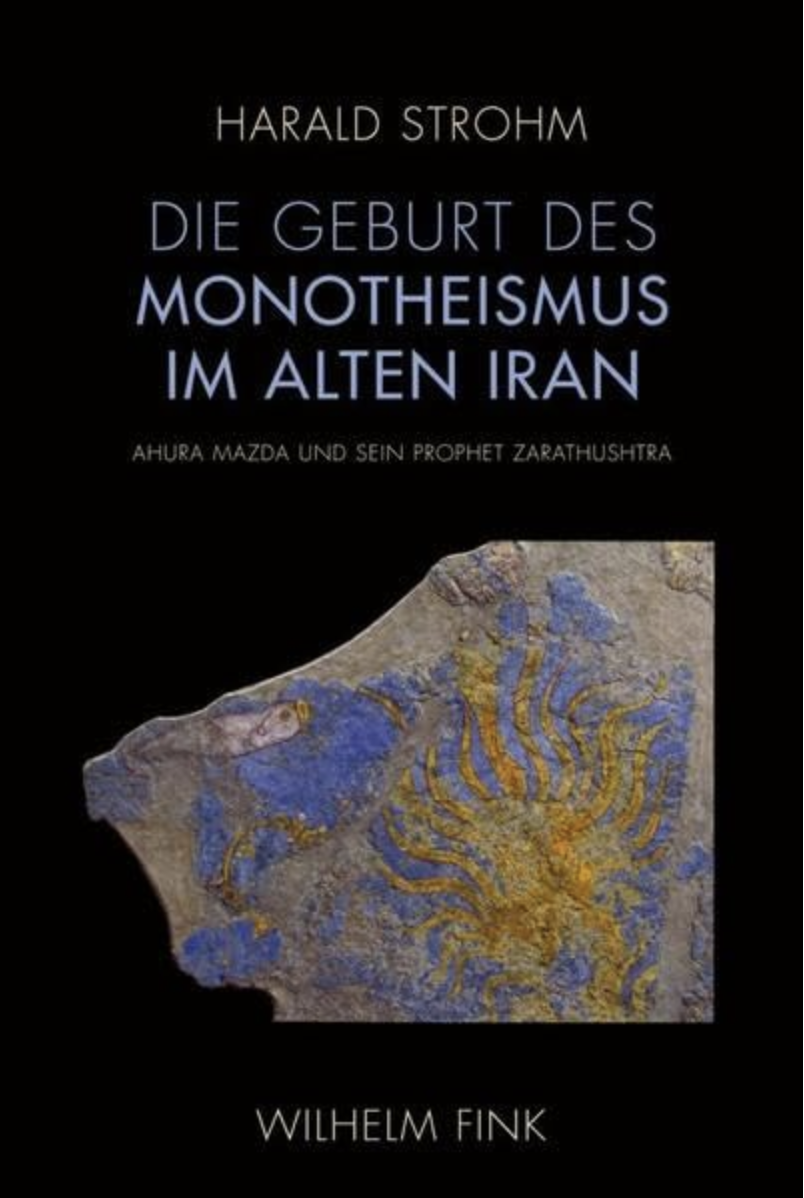
The Birth of Monotheism in Ancient Iran
Ahura Mazda and His Prophet Zarathustra
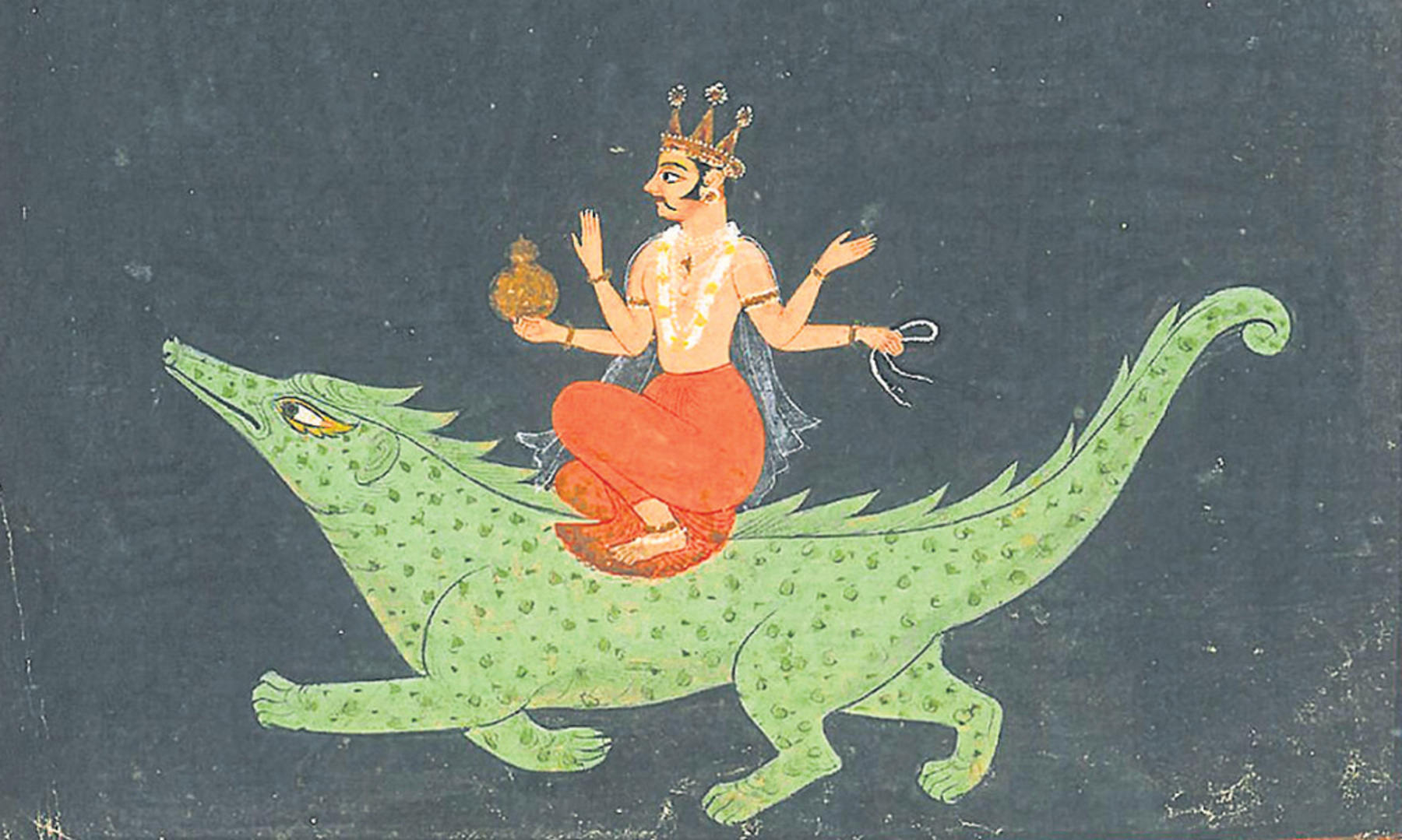
The majority of Iranian and Indological scholars concerned with this topic have long held that Ahura Mazda, the monotheistic god proclaimed by Zarathustra around 1000 BCE, evolved from the same god as the Vedic Asura Varuna of neighboring India. Supported by additional arguments, particularly psychological ones, this "equation" proves to be a unique opportunity to reconstruct the genesis of ancient Iranian monotheism. The relatively sparse source material from Iran is thus illuminated by the virtually inexhaustible findings concerning Varuna in ancient India.
Not only Varuna's fool's role in Indian theater, but also Varuna's feared resentment, his split into light and dark traits, his lofty moral demands, his world-weariness, ... his disturbed relationship with women: All these characteristics have their clear counterpart in the Ahura Mazda of the Iranian prophet.
And yet the old god became something completely different in Zarathustra's revelations. The former oddity in an otherwise illustrious polytheistic pantheon now mutated into a silent, transcendent, and strictly judging patriarch and autocrat. Since it is permeated by evil and thus flawed, his creation, the present world, must one day be destroyed with molten metal—in order to finally, in a second attempt, usher in a new and now completely successful world. — The mechanisms of this transformation are also revealed through the psychology of the Varunian ...
Reviews (selected):
Neue Zürcher Zeitung, Bernhard Lang: „Ein Problemkind wird Gott"
Deutschlandfunk – Büchermarkt, Manfred Schneider: „Die Geburt des Monotheismus im alten Iran"
Frankfurter Rundschau and Berliner Zeitung, Arno Widmann: Interview with H. Strohm: „Der eine Gott macht Schluss mit den vielen Therapeuten"
Wilhelm Fink Verlag, Paderborn, 2014 (March). 400 pages.
"Harald Strohm combines the scholarship of a Vedic researcher with today's psychological knowledge of early childhood development ... Since Mircea Eliade, no one has portrayed, interpreted, and pondered archaic religion with such precision and vigor."
– Bernhard Lang, Neue Zürcher Zeitung
"This book allows us to look from a deep past into our present, where so many wars are fought in the name of individual gods. At the same time, Harald Strohm's cheerful, learned, and lightly written depiction ... reminds us of the lost era of the joyful gods of childhood."
– Manfred Schneider, Deutschlandfunk
"Strohm traces the historical development of Varuna, the leader of the polytheistic Indo-Iranian pantheon, and shows how he became Zoroaster's monotheistic deity Ahuramazda. Ahuramazda later, during the time of the Babylonian captivity, had a formative influence on the monotheism of the Hebrew Bible and thus on Christianity and Islam."
– Michael Witzel, Harvard University
"As a developmental psychologist, Harald Strohm brings movement to the early history of the Indo-Iranian religion. A very special merit is the reproduction of the early 8th century. A mural from the 8th century from Panjikent, Tajikistan."
– Helmut Humbach, Universität Mainz †
Review:
Die Presse, Vienna, Religion section: "Vom Einzelgänger zum einzigen Gott"