A God who creates justice and peace
Die Geschichte des Monotheismus beginnt nicht im Vorderen Orient, sondern im alten Iran.
By Harald Strohm
In both academic and public discourse, the monotheism of the ancient Iranian prophet Zarathustra still remains in the shadow of the oldest monotheistic movements of the Near East: that of the ancient Egyptian Pharaoh Akhenaten in the fourteenth century BCE and the "Yahweh-alone" movement of Israel from the eighth century onward. One reason for this is that Zarathustra was long dated to the sixth century. However, more recent research places it at around 1000 BC or even earlier.
Zarathustrism was the dominant religion of Iran for more than 1,500 years. That he influenced the Western neighboring cultures, especially the Eastern ones, is well attested for Greece and at least likely for Israel. Islam also exhibits traits that can be traced back to the historically uncertain figure of Abraham, but without difficulty to the Zoroastrianism that was still very virulent during the time of Mohammed. The fact that Muhammad called for a campaign against the superpower Iran during his Meccan period only makes sense if he counted on ideological allies there.
An Idea with Consequences
The Gathas, cult songs going back to Zarathustra himself, give us intimate insights into the living conditions of the prophet, but above all into the prehistory of his revelations. They arose in a milieu of sectarian priesthoods that had already been working for centuries not only on a transformation of the established polytheism into a centralistic and tendentially monotheistic religion, but also planning a subversive political overthrow. Modern linguistics, archaeology, and most recently genetic analysis make it possible to trace this prehistory with increasing precision.
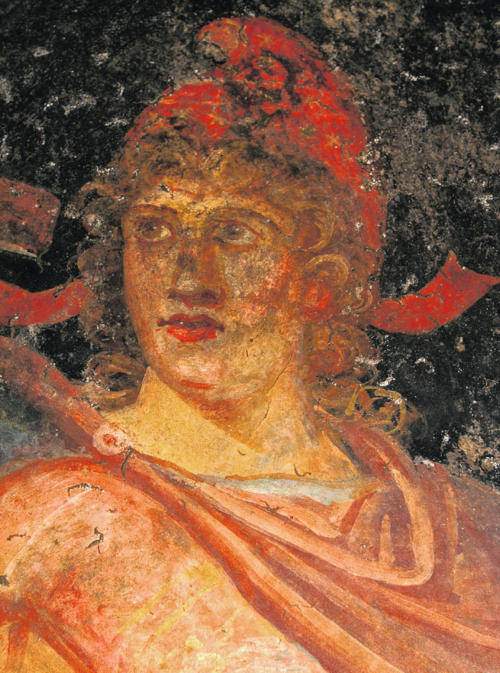
Like Europe, Iran and western India were also militarily overrun in the centuries around 2500 BC by tribal peoples from the steppe regions north of the Black and Caspian Seas. These Indo-Europeans, identified in Europe as Corded Ware people, imported a series of cultural innovations: besides their language, above all the domesticated horse as well as the (individually mounted) wheel. But even more consequential seems to have been one of their "ideas." It made it possible to establish a kind of prehistoric peace among themselves, but also among the peaceless, often war-weary settled population for several centuries. For the western Indo-Europeans, this peace epoch is reliably documented archaeologically, and it seems to have been quite similar in the East. Here, however, we also have archaic texts that reveal intellectual-historical backgrounds to us. According to these, the military dominance and the monopoly on violence secured thereby by the Indo-Europeans was only one building block of this Pax praehistorica. The other seems to have been the pre-idea or primal idea of a republican state. This is suggested by the reconstruction of the slow "birth," extending over centuries, of a peculiar god. His name: Mitra, literally "God Contract."
Mitra arose, like many gods, from a concept, namely from the abstract noun mi-tra. The root mi- meant "to bind, to connect," the ending -tra, -tro, -tru "instrument for." Just as the Latin ara-trum means "instrument of plowing, plow" and just as the Greek thea-tron meant "instrument of spectacle," so mi-tra meant "instrument of connecting," hence "contract." The linguist Paul Thieme was able to show, using the oldest Indo-Iranian text layers, that this mi-tra initially existed simply as an impersonal neuter. But this was then, in a first step, turned into a masculine, thus into a "man," and was personified in a second step into a proper god.
Peace Is Where Law Prevails
This sounds more alien than it is. For Schiller, too, personified "joy" in his famous ode set to music by Beethoven as a "heavenly" being and "daughter from Elysium." Analogously, Rousseau promptly also personified "the" contract as "sainteté du contract." And the feminine "La" République and "La" Liberté were also personified in the constitution of the enlightened state, indeed cast hundreds of times in bronze as bare-breasted heroines.
According to Thieme's dating, the mere personification of the contract will have already occurred in common Indo-European times. But Mitra developed into a god only in the East; sometime around the turn of the third millennium. As with creation gods worldwide, it was now also said of him that he had once pushed heaven and earth apart and populated the freed intermediate space with plants, all kinds of creatures, and humans. And Mitra's creation was also considered successful and accomplished: one saw that it was good...
What was unique about Mitra, however, was that the success of his creation was substantially attributed to his core competence, the contract. Peaceful and free coexistence, so the message went, can only succeed in more complex cultures if law prevails and if this law is moreover not simply imposed from above, but first determined through consultation and voting with the participation of all and then established equally for all. Mitra's competence was thus precisely not, as with other early state gods, to decree law, but "only" to breathe, as it were, sacred reverence into the contracts negotiated by humans.
Certainly, a modern republican state could not yet be made with this; separation of powers and independent judiciary were still far off. But a pillar that endures to this day was nevertheless established, and accordingly Mitra had a unique career ahead of him. Beloved by the people for his mediating friendliness (to this day!), he soon became the state-supporting god of Iran and several of its neighbors. The long line of kings alone who were considered Mithradates, "appointed by Mithra," proves it.
However, a new niche now also opened up. Into it stepped the aforementioned sectarian priesthoods: According to the Mithraic conception, all law was human work and as such fallible; therein lay and lies precisely the seed of self-criticism and republican tolerance. But in view of the forms of injustice and inequality that inevitably occur in every culture, it was unavoidable that factions now organized themselves demanding a more just form of law that completely equalized everyone: a higher, infallible, divine law!
Revaluation of All Values?
And one immediately sees the rest as well: Such divine law must not be left to the squabbling of the old polytheistic pluralism. It could only derive from a hitherto hidden, and in that sense transcendent, god. But only individual privileged persons would have access to him: chosen ones who heard voices from the beyond. After being sent down and over to them, this higher knowledge immune to objections would then, however, have to pass into the sealed-off administration of a spiritual elite. They, and they alone, could truly legitimize state power, and therefore they must have the last word in all political questions. But therefore the previously Mithraic-conceived kingship must be replaced by a kingship by the grace of that new god—which in reality, of course, always only meant: by the grace of this spiritual elite.
Zarathustra's Gathas are carried by contemplation of a theological-political overthrow of this type. This overthrow would only finally occur at the end of days, according to the prophet: when "the two opposing armies"—here of good, there of evil—would clash and when creation, overgrown with evil, would finally be burned down as a whole with God's help and transformed into a world of eternal happiness. But until then, it was still necessary to expropriate the unbelievers and "liars all around" and to proceed against them with terror and exclusion. In the exact wording: "Let no (follower) of the liar listen to your teachings [...] instruct these (liars) with (your) weapon..."
Following Nietzsche, the great Old Iranian scholar Helmut Humbach once qualified the project of political Zoroastrianism as a "revaluation of all values." But however revolutionary and radical it appears in this oldest tangible form: Zarathustra was not the first to proclaim it. This can be seen simply from the fact that his "new" god, Ahura Mazda, "Lord Wisdom," on closer inspection was an old acquaintance.
Roughly 500 years earlier, he is also encountered in the oldest cult songs of India. There too he was already the opponent of Mitra, and there too he and his priesthoods were already considered sublimely moralizing and eager for monocracy—but at the same time world-despising and addiction-prone, treacherous, unjust, and ready for violence, even murder. The supposedly so radiant god and his white-robed priesthood had thus already inscribed themselves with dark colors into the cultural memory of India. This is only possible if bad experiences had been made with them once again several centuries earlier, thus already in the early second millennium.
Article appeared German in: Neue Zürcher Zeitung; May 26, 2018 / Literature and Art / Page 50
https://www.nzz.ch/feuilleton/ein-gott-der-recht-und-frieden-schafft-ld.1387645